Best Time to Visit Belize: Month-by-Month Weather, Seasons, and Travel Tips

Belize is one of those destinations that looks stunning in photos year-round. Think turquoise water, jungle backdrops, world-class reef just offshore. But the reality? It really does depend on when you go.
I visited in March and had the best trip, but there were a couple of things I didn’t expect, including seaweed that made the beach smell less than tropical.
So if you’re planning a trip to Belize and trying to figure out the best time to visit, I’m going to break it all down honestly: dry season vs. rainy season, what the Belize hurricane season actually means for your trip, and what I’d do differently timing-wise if I went back.
Trip essentials
Planning your trip?
Everything you need to book your trip.
Quick Answer: Best Time to Visit Belize
If you just want the short version:
The best time to visit Belize is late November through April, when you’ll get the most reliable weather, the clearest reef conditions, and the easiest overall experience. That said, the “best” timing really depends on what you’re prioritizing.
Here’s a quick breakdown:
✨ Best overall weather: Late November through April (Belize dry season)
✨ Best for fewer crowds and solid value: Shoulder season — roughly late April through June, or November
✨ Best budget deals: Rainy season, June through October
✨ Highest storm risk: August through October (peak of Belize hurricane season)
A quick heads-up on seaweed: This one surprised me. I went in March, and there was a noticeable amount of sargassum seaweed on the beach, and truthfully, it didn’t smell great.
Seaweed tends to be most common from spring through summer across the Caribbean, with December through February generally being the lower-risk window. That said, it’s not guaranteed either way; it can be very location-dependent and shift week to week.
If having a clean beach experience is your top priority, December through February is your safest bet timing-wise.
Belize Seasons Explained
Belize Dry Season
The dry season runs roughly from late November through April and is the most popular time to visit — for good reason. Weather is reliable, skies are clear, and conditions on the water are generally excellent for snorkeling, diving, and exploring the reef.
Inland adventures like cave tubing and visiting the Mayan ruins are also more accessible when the roads aren’t muddy and river levels are manageable.
The tradeoff is predictable: prices are higher, popular spots are busier, and if you’re traveling around Christmas or spring break, expect the island to feel noticeably more crowded. Still, for a first-time visit where you want things to go smoothly, dry season is worth it.
Belize Rainy Season
Rainy season runs from roughly June through October, with May and November acting as shoulder months on either side. The rain is usually heavy but short.
Think afternoon downpours that clear up within an hour, not all-day grey skies. The jungle is lush and green, prices drop, and the overall pace slows down considerably.
The tradeoffs are real, though. Humidity climbs, some tours become weather-dependent, inland roads can get rough, and seaweed tends to be more of an issue during these months.
If you’re flexible and budget-conscious, the rainy season can be a good time to go, just build in some buffer days.
Belize Hurricane Season
Hurricane season officially runs June through November, with the highest risk concentrated between August and October. Belize has been hit by major storms historically, so this is worth taking seriously. I personally would not risk it.
A few practical notes if you’re considering it: buy travel insurance that covers weather-related disruptions, book refundable or flexible accommodations where possible, and keep an eye on forecasts in the weeks before your trip. Ferry and water taxi service between the cayes can get disrupted during storms, so build flexibility into your schedule rather than locking in must-do activities.
Belize Weather by Month
January and February
This is peak dry season, and honestly, one of the most reliable windows to visit. Temperatures are warm but not oppressive. The breeze keeps things comfortable, and seaweed risk tends to be lower during these months.
It’s a great time for snorkeling and diving on the Belize Barrier Reef, and conditions are generally amazing for both beach days and inland trips. If it’s your first time and you want “easy mode,” I’d go in January or February.
March
Dry season energy is still going strong in March, but spring break starts to build up toward the end of the month, which means more tourists, especially on Ambergris Caye. I visited in late March and found the crowds manageable, honestly less than I expected.
What I didn’t expect was the seaweed (again). It was noticeable on the beach in front of our hotel, and on some days the smell was pretty strong.
The hotel did a good job of clearing it, but it was still there. The water and the reef were still beautiful.
Our snorkeling tour was one of the highlights of the whole trip, but if you’re expecting pristine white sand beach days, March might not deliver that.
April
April sits in an interesting middle zone. Weather is still fairly dry, visibility on the reef tends to be good, and crowds thin out compared to peak winter and spring break season.
Temperatures start climbing, and seaweed risk can increase depending on ocean currents. It can be a good time to go if you want good conditions without peak-season prices or crowds.
Just go in with realistic expectations about heat and the possibility of some seaweed.
May
May is quieter and noticeably more affordable. The island slows down, humidity starts to climb, and rain becomes more likely toward the end of the month.
It’s a solid option for budget-conscious travelers who don’t mind the heat and want a calmer vibe. Not the most popular window, but far from a bad one.
June
June marks the official start of rainy season and also the beginning of Belize hurricane season, though actual storm risk is still relatively low this early in the window. You’ll find good deals, fewer tourists, and green landscapes, especially inland.
Sargassum seaweed can become more of a factor during these months across the Caribbean. Worth it but just go in knowing what to expect.
July and August
Summer brings heat, humidity, and a mix of sun and rain. Family travel picks up in July and August, which keeps some destinations busier than you might expect for “rainy season.”
Storm risk increases in August. Seaweed tends to be more prevalent during these months.
That said, Belize is still beautiful, and the reef is still diveable.
September and October
This is the wettest stretch of the year and the window with the highest hurricane risk. Prices are at their lowest, but some accommodations and tour operators may have reduced availability.
If you do visit now, book refundable where possible, get travel insurance, and treat your itinerary as a rough plan rather than a fixed schedule. It’s not the window I’d choose, but experienced travelers who prioritize value and flexibility can make it work.
November
Early November can still feel rainy, but by mid-to-late month, the weather starts shifting toward dry season conditions. There are fewer crowds, prices are reasonable, and the landscape is still beautifully green from the rainy season.
If you can go in late November and beat the holiday rush, this might be the best value window of the year.
December
Dry season returns in December, and with it comes holiday demand. Christmas through New Year’s is one of the busiest and most expensive times to visit Belize (as is anywhere else), with premium pricing across hotels and tours.
That said, weather is lovely, conditions on the reef are great, and seaweed risk tends to be lower. If you can book well in advance and the holiday timing works for you, December is a beautiful time to go.
Just don’t leave accommodation booking until the last minute.
Best Time to Visit Belize by Trip Style
Best Time for Beaches
If your trip is primarily beach-focused, aim for December through February for the most reliable combination of sun, lower seaweed risk, and comfortable temperatures. March and April can still be great, but seaweed becomes more of a variable, and as someone who experienced it firsthand in late March, I’d say it’s worth factoring in if beach days are your main event.
Here’s what I’d do: if you’re seaweed-sensitive, prioritize the winter months and make sure your accommodation has a good pool as a backup. The beaches in San Pedro are smaller and less expansive than classic Caribbean beach destinations anyway, so having a pool you love matters more than you’d think.
I wouldn’t recommend Belize if you’re looking for a vacation just for the beach!
Best Time for the Belize Barrier Reef
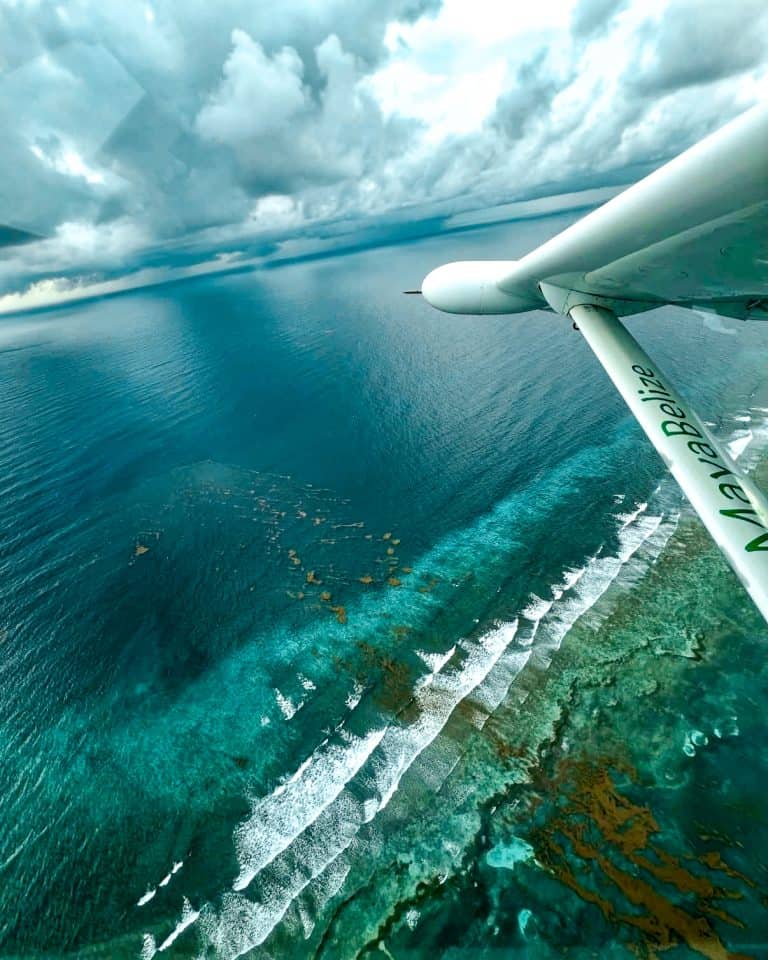
The Belize Barrier Reef is the second largest coral reef in the world — something I genuinely didn’t know until our snorkel guide told us out on the water — and it’s diveable and snorkelable year-round. That said, the best visibility and calmest water conditions typically fall during the dry season, from late November through April.
Wind and rougher waves increase during the rainier months, and tour operators may cancel trips during storms or rough weather.
If snorkeling or diving the reef is your primary reason for visiting, dry season is the move. We went in March with Tuff E Nuff, and it was incredible.
We saw nurse sharks, stingrays, turtles, and more fish than I could count. Even on a slightly cloudy day, the underwater visibility was great.
Best Time for Ambergris Caye
Ambergris Caye (and its main town, San Pedro) is the most popular base for visiting the reef, and timing affects the experience in a few specific ways. Peak season from December through March brings more tourists, higher prices, and a livelier overall vibe.
Shoulder season in April through June and again in November tends to be quieter, more relaxed, and noticeably more affordable. However, I stayed here in March, and thought there were few crowds. It still felt quiet.
Seaweed is the wildcard. Some stretches of coastline on Ambergris Caye get hit harder than others, and it can vary week to week.
In my experience in late March, it was enough to affect the beach smell and made me prefer the pool over the sand. If you’re planning a beach-heavy trip to Ambergris Caye specifically, I’d lean toward December through February and check sargassum reports closer to your travel dates.
Best Time for Inland Belize
If cave tubing, the Mayan ruins, zip-lining, or jungle lodges are on your list, dry season is generally easier for logistics. Roads are more accessible, hiking conditions are better, and tour cancellations due to weather are less common.
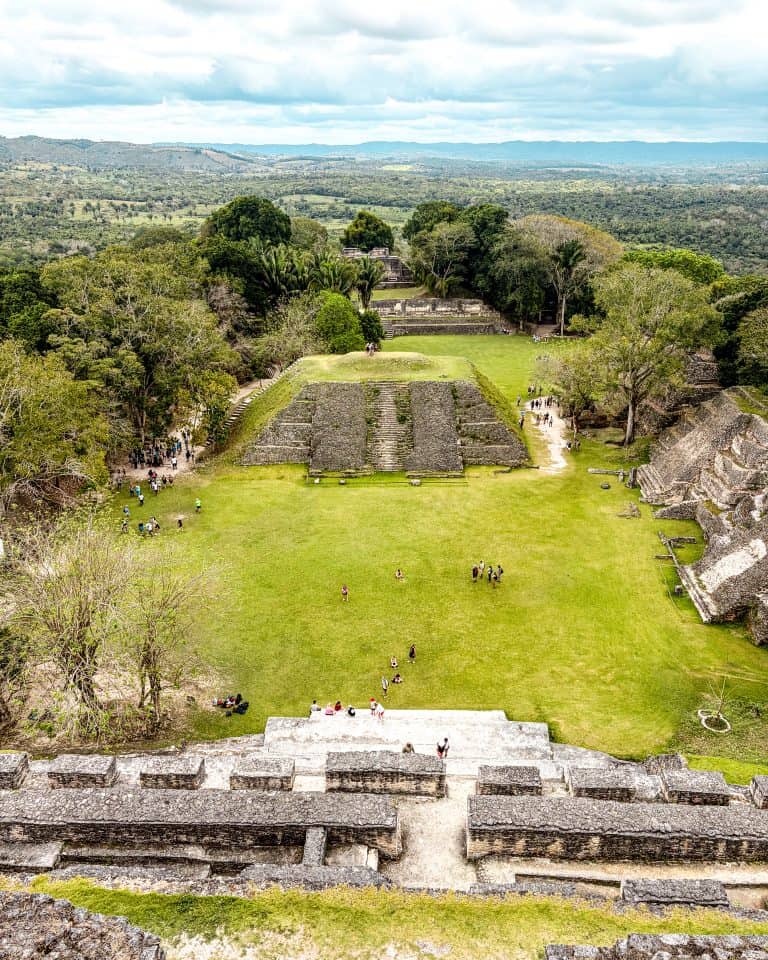
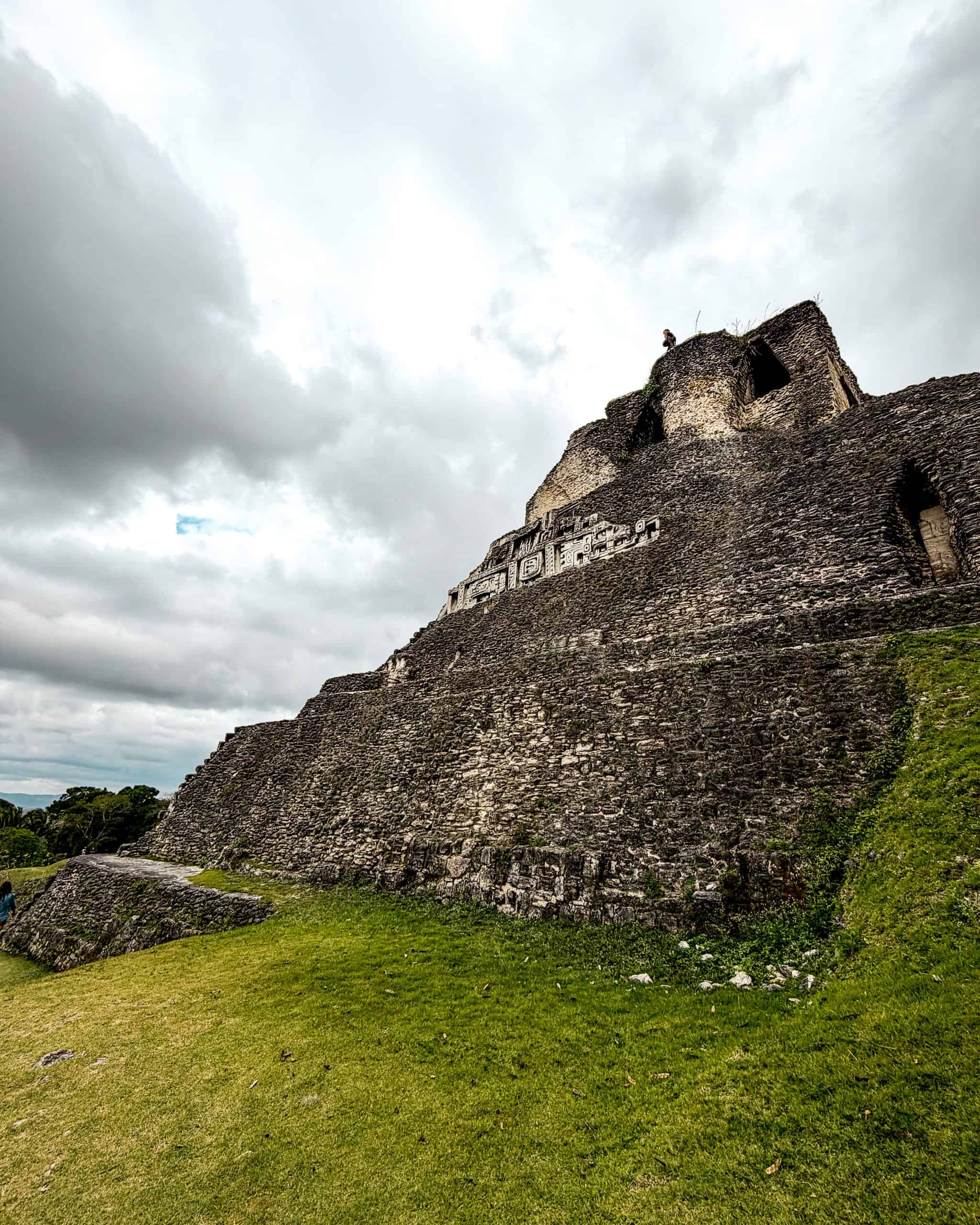
We did a full-day tour in March that included the Xunantunich ruins, zip-lining, and cave tubing through jungle caves, and it was one of the best days of the entire trip.
The rainy season upside: waterfalls are fuller, the jungle is dramatically lush, and it can be a cool vibe. Just know that river conditions can affect cave tubing tours, and some routes become difficult after heavy rain or close entirely.
Build in flexibility if you’re going during the wetter months.
Belize Seasons at a Glance
Here’s a simple way to think about the tradeoffs:
⭐️ Dry Season (late November through April): Higher cost, most reliable weather, best reef and beach conditions, lower seaweed risk in winter months. Best for first-timers and beach or reef-focused trips.
⭐️ Shoulder Season (April through June and November): Fewer crowds, better value, good conditions with some variability. Best for flexible travelers who want a quieter experience without full rainy-season risk.
⭐️ Rainy Season (June through October): Lowest prices, lush landscapes, slower pace. Best for budget-conscious travelers with flexible itineraries.
⭐️ Hurricane Peak (August through October): Lowest prices but highest disruption risk. Only recommended if you’re flexible, well-insured, and experienced traveling in unpredictable weather.
Honest take: if you want the easiest, most predictable trip, dry season is worth paying for. If you want fewer people around and don’t mind a little weather unpredictability, shoulder season can honestly be amazing.
Common Mistakes to Avoid
✨ Not accounting for seaweed (I’m repeating myself for a reason). This was my biggest surprise in Belize. I didn’t check sargassum conditions before booking and ended up with noticeably smelly beaches during my March trip.
If beach days are a priority, research seaweed conditions for your travel window and choose winter months when risk tends to be lower. Also: make sure your hotel has a great pool. You’ll use it.
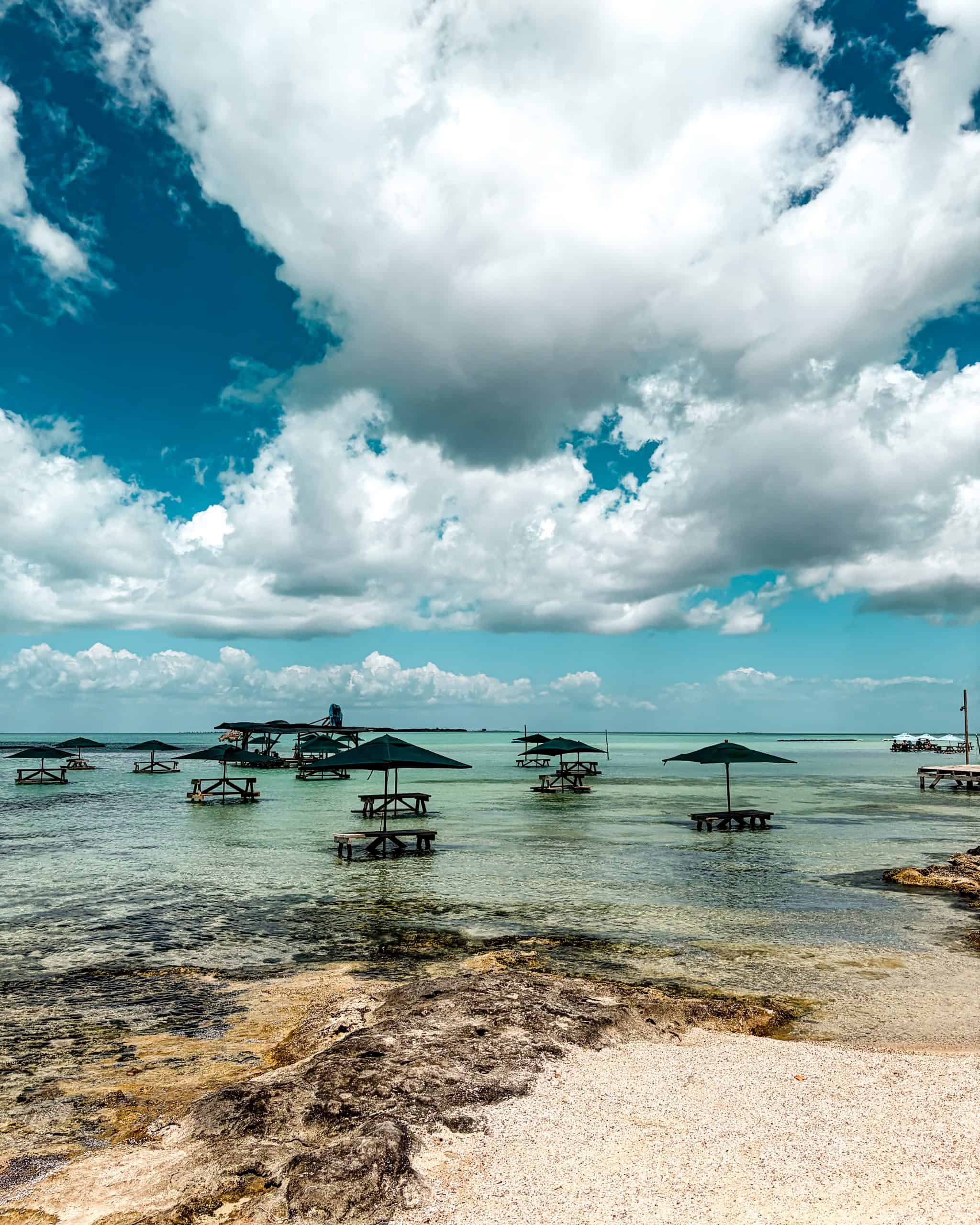
✨ Expecting wide, expansive Caribbean beaches. The water in Belize is genuinely stunning — clear, shallow, and beautiful — but the beaches themselves are smaller and less expansive than you might picture.
San Pedro sits on a barrier island (a caye, not a classic island), which means the beach strips are narrow.
✨Booking reef or cave tours last-minute without a backup plan. We actually booked both our snorkel tour and our full-day inland tour only a few days ahead, once we arrived and talked to the hotel concierge, and it worked out fine.
But popular operators like Tuff E Nuff fill up, especially in peak season. Book ahead when you can, and if you’re going during rainy season, have a Plan B for weather-dependent activities.
✨ Ignoring hurricane season realities. Traveling from August through October without travel insurance or refundable bookings is a real gamble.
It doesn’t mean you can’t go, just plan more intentionally.
✨ Underestimating the sun. The UV index in Belize gets up to 10. I burn easily and still got more sun than expected. Reapply sunscreen constantly, wear a swim shirt if you’re on the water for hours, and bring a hat.
Getting to Belize and Getting Around
How to Get There
Fly into Philip S. W. Goldson International Airport (BZE) in Belize City. There are direct flights from several major US cities.
I flew direct from Newark, which was about four to four and a half hours. Honestly, pretty easy for an international trip, especially from the East Coast.
Getting to San Pedro from Belize City
Once you land, you have two options to get to Ambergris Caye:
Water taxi: Take a shuttle to the boat terminal, then a roughly 90-minute water taxi ride to San Pedro. It’s scenic and budget-friendly, and our boat made a couple of stops along the way. I liked it as an arrival experience.
Domestic flight: A 14-person puddle jumper that takes about 15 minutes. Pricier, but if you want to save time and skip the boat, it’s worth it. We took the flight on our big adventure day and I loved the experience — tiny local airport, boarding passes handed to you personally, and you’re there before you’ve had time to think about it.
If I went back, I’d probably fly in at least one direction. The boat is fun once, but the flight is genuinely impressive for how quick it is.
Getting Around San Pedro
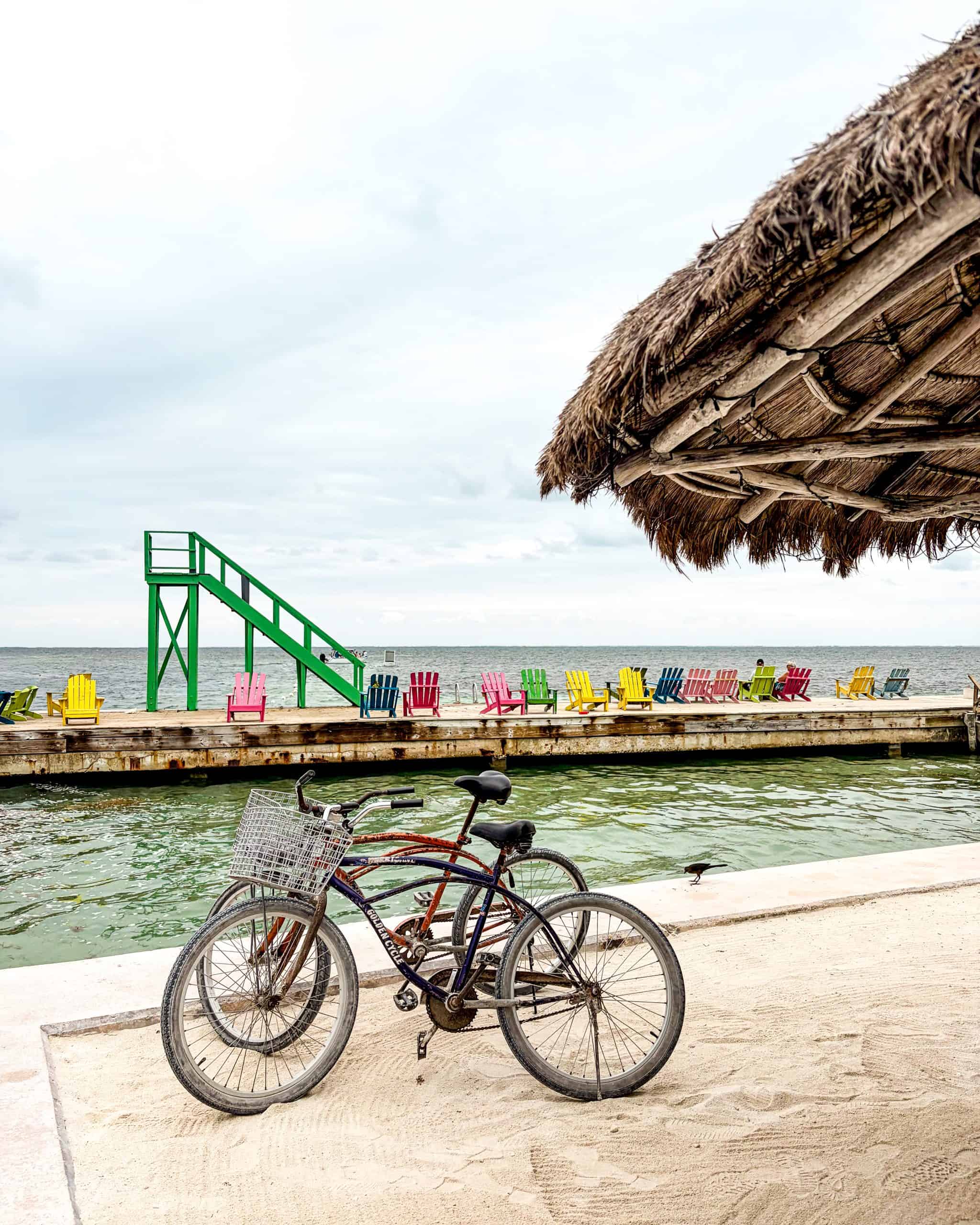
Everyone on the island gets around by golf cart, and it’s honestly one of my favorite things about San Pedro. There’s one main road running the length of the island, locals zip around on motorbikes, and tourists cruise in golf carts.
It makes the whole place feel like a permanent vacation. Renting a golf cart for the day is easy and gives you the freedom to explore town, get to Secret Beach, or find coffee in the morning without depending on anyone else.
Where to Stay in Belize
Ambergris Caye (San Pedro) — Best for Reef and Beach
San Pedro is the most popular base for first-time visitors to Belize, and for good reason. It’s easy to get to, close to the reef, and has the widest range of tours, restaurants, and accommodation options.
The vibe is casual and pretty touristy. Think golf carts, open-air bars, and a very vacation-y energy.
We stayed at Grand Caribe, which is one of the nicer properties on the island. The rooms are set up more like suites.
Ours was a three-bedroom with a full kitchen, living room, balconies, and a massive bathtub in the master. The pool is excellent (swim-up bar included), and the property is well-maintained and clean.
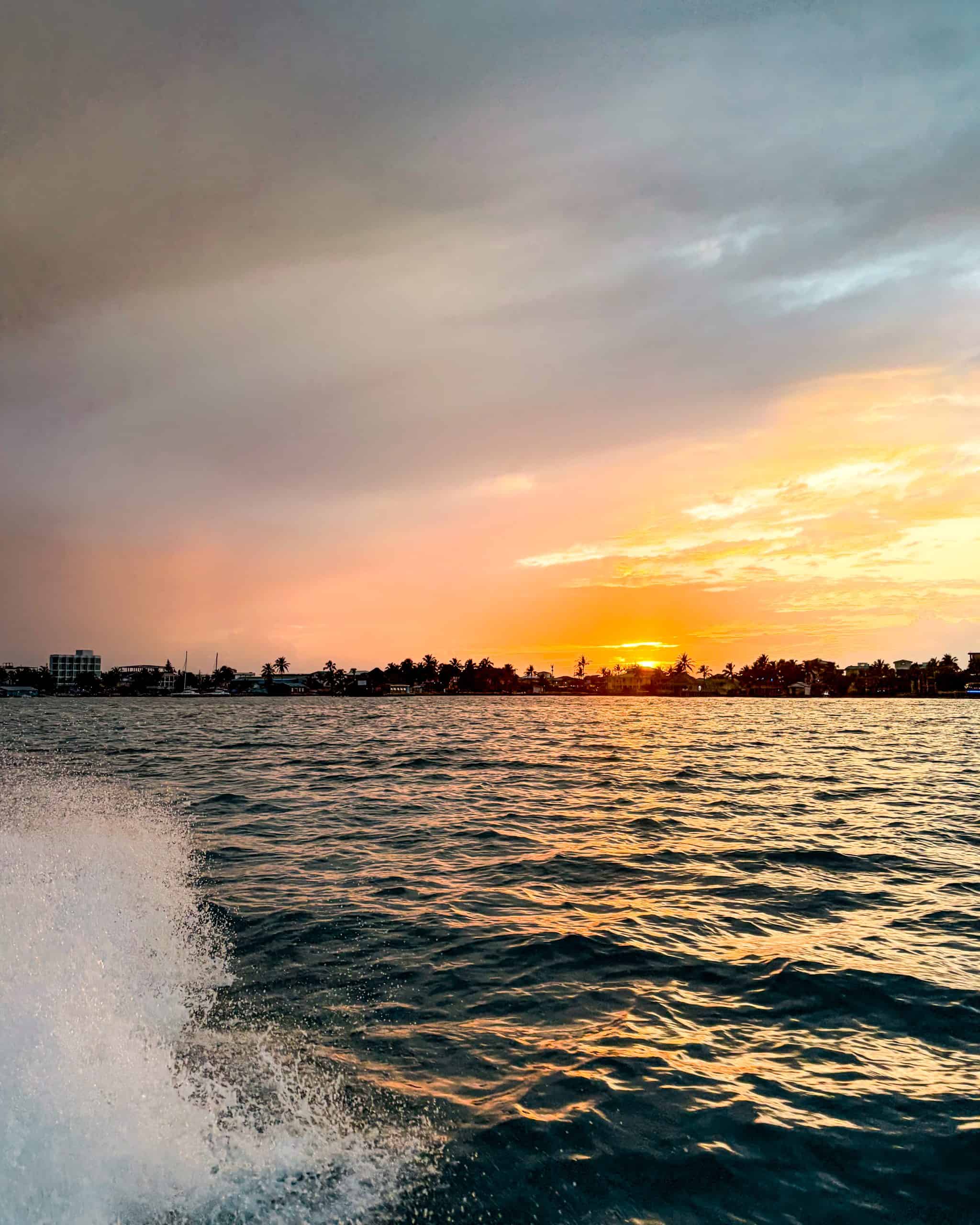
Grand Caribe’s sister property, Sunset Caribe, faces the western side of the island and has stunning sunset views and a more modern pool setup. Guests can use both, which is a genuinely great perk.
We walked over to Sunset Caribe specifically to watch the sunset one evening, and it was beautiful.
📍 Grand Caribe — one of the nicest options on the island, great pool, suite-style rooms
📍 Sunset Caribe — more modern pool, better sunsets, slightly different vibe
📍 For a mid-range or budget stay, look for well-reviewed guesthouses or smaller hotels closer to the center of town in San Pedro
Caye Caulker — Best for a Slower Pace
Caye Caulker is smaller, quieter, and more laid-back than San Pedro. We stopped there during our snorkel tour and walked through the town.
It’s genuinely cute, easy to explore on foot, and has a really relaxed energy. It’s a great base if you want fewer tourists and a slower pace, and it’s easy to day trip to San Pedro or the reef from there.
Although it’s a slower pace, a heads-up, it’s still a location with many bars and has a vacation-y drinking culture.
San Ignacio — Best for Jungle and Culture
If inland Belize is your focus — caves, ruins, jungle lodges, waterfall hikes — San Ignacio on the mainland is the place to base yourself. It puts you close to Xunantunich, the ATM Cave, and the lush Cayo District.
It’s a completely different experience from the Cayes and worth considering if you want to split your trip between reef and jungle.
FAQs
What is the best month to visit Belize?
December through February is generally the best window for weather, reef conditions, and lower seaweed risk. January and February in particular offer reliable sunshine, comfortable temperatures, and excellent visibility on the water without the Christmas holiday price surge.
When is the rainy season in Belize?
Belize’s rainy season runs roughly from June through October, with May and November acting as transition months on either side. Rain is typically short and intense rather than all-day, but humidity is higher, and some tours can be weather-dependent during this period.
When is hurricane season in Belize?
Hurricane season officially runs June through November, with the peak risk window falling between August and October. Travel insurance and flexible bookings are strongly recommended if you’re visiting during this period.
What months have the least rain in Belize?
December through April sees the least rainfall overall, with January and February typically being the driest and most consistently sunny months of the year.
Final Thoughts: When Would I Go Back?
Honestly, I’d definitely go back to Belize. March was great for avoiding the biggest crowds, and the reef snorkeling was some of the best I’ve ever done.
The cave tubing, the golf cart lifestyle, the people, the food at Coconut Café — all of it was worth it. But the seaweed was a real surprise, and if I’m being honest, beach days just weren’t what I expected them to be.
If I went back, I’d aim for late January or February. Lower seaweed risk, reliable sun, and still within that sweet spot before spring break energy kicks in.
Belize is an incredible trip. It’s easy to get to from the East Coast, the reef is world-class, and the mix of pool relaxation and adventure days is hard to beat.
Just go in with honest expectations. It’s not an ultra-luxury beach destination, and the island is more casual and touristy than some places I’ve been.
But that’s also part of what makes it so fun and low-stress. I hope you have the best time!