


Heads up MadTravels contains affiliate links and is a member of the Amazon Services LLC Associates Program. If you book or buy through one of these links, I may earn a small commission at no extra cost to you. Read my disclaimer for more information.
I could talk about Barcelona forever. It’s one of my favorite cities in the world. I’ve visited in different seasons, and I want to share my favorite time of year to go and when I think it’s best to skip.
Visit in July and you’re navigating packed beaches and long, hot lines outside Sagrada Família.
Show up in early May and the city feels almost like it’s yours — warm enough to be outside all day without getting too hot or cold, shorter lines, and an overall less touristy feel.
Figuring out the best time to visit Barcelona isn’t just about weather. It’s about what kind of trip you want.
This guide breaks it down month by month so you can figure out the right window for your trip. Let’s get into it!
Book your Barcelona trip
Affiliate links: I may earn a small commission at no extra cost to you.
Best Time to Visit Barcelona at a Glance
If you want the short version: late spring (April–May) and early fall (September–October) are the strongest windows for most travelers.
The weather is good, the crowds are manageable, and you’re not paying peak summer prices for everything.
Here’s a quick overview:
| Season | Months | Weather | Crowds | Best For |
|---|---|---|---|---|
| Early Spring | Feb–Mar | Cool, mild | Low | Budget travel, sightseeing |
| Late Spring | Apr–May | Warm, sunny | Moderate | Everything |
| Summer | Jun–Aug | Hot | Very High | Beaches, nightlife, festivals |
| Fall | Sep–Oct | Warm, pleasant | Moderate | Sightseeing, food, culture |
| Winter | Nov–Jan | Mild, cool | Low | Budget trips, museums, culture |
My personal favorite is early May.
When I visited in May 2026, the weather was sitting in the high 60s, sunset was around 9pm, and the city felt so beautiful.
The beach was accessible, the major sites were manageable, and crowds weren’t overwhelming.
More on that below.
Barcelona Weather by Month — What to Actually Expect
January and February
January and February are the quietest months in Barcelona, which has real appeal depending on what you’re after.
Temperatures sit around 45–60°F — cool enough to need a jacket but mild compared to most of Europe in winter.
You’ll have the Gothic Quarter and Park Güell almost to yourself, and prices for flights and accommodation are at their lowest.
It’s not beach weather, and some spots near the waterfront feel a little sleepy, but for museums, architecture, and wandering without crowds, it’s a genuinely underrated window.
March and April
Things start warming up in March, with temperatures climbing into the mid-60s by April. March can bring some rain, so pack a layer.
Easter week (Semana Santa) falls in this window and draws crowds — worth knowing before you book.
By April, the parks and gardens are blooming, especially Montjuïc, and the city starts to feel fully awake again.
Early spring is a little chilly but still beautiful, and the crowds are so much more manageable than summer.
Just don’t plan your trip around beach days this time of year. It’s more of a sightseeing and wandering trip, which honestly isn’t a bad thing.
May
May is consistently one of the best months to visit Barcelona, and it’s my favorite window.
The weather sits in the high 60s to low 70s, the evenings are long (sunset close to 9pm), and you’re not fighting the summer crowds yet.
When I visited in early May 2026, the timing felt ideal. The city was awake but not chaotic.
We wandered through Eixample, stumbled onto incredible gluten-free bakeries, did the Sagrada Família tower tour without it feeling unbearable, and had long, unhurried evenings that stretched well past 9pm.
If you’re trying to pick a single month, May is it.
June
June is when summer starts in earnest.
Temperatures climb into the mid-to-high 70s, the beaches fill up, and the lines at Sagrada Família and Park Güell get noticeably longer.
It’s still a great month — the energy is high and the days are long — but you’ll want to book accommodation and major attractions well in advance.
Sónar Festival (electronic music) typically falls in June, which is worth planning around if that’s your thing.
July and August
Peak summer.
Temperatures regularly hit the 80s and 90s°F, the beaches are packed, and tourist crowds are at their max.
Prices are highest, availability is tightest, and some locals actually leave the city in August, which means a handful of restaurants close.
If you’re going for the beach and nightlife, summer delivers. But if you’re there for architecture and wandering through neighborhoods, this is the hardest version of that trip.
The Sagrada Família is always worth visiting, but navigating it in peak summer heat with large crowds is a different experience than shoulder season.
Book everything far in advance and set realistic expectations.
September and October
September and October are great months that don’t get enough credit.
Summer heat fades, the ocean is still warm from months of sun, and the crowds thin out considerably.
La Mercè festival (late September) is Barcelona’s biggest local celebration — free events across the city, very worth timing a trip around if you can.
October is quieter still and beautiful.
It’s a strong alternative to spring for anyone who missed the May window or wants warm swimming weather with fewer crowds.
November and December
Temperatures drop into the 50s and 60s°F, tourist numbers fall, and prices follow.
Barcelona’s indoor food scene and architecture are year-round draws, so a winter visit still has plenty to offer.
December brings Christmas markets — festive, cozy, and far less crowded than summer.
If your priority is budget and culture over beaches, winter is worth considering.
Planning a weekend away?
Get The Weekender: weekend trips, already planned.
Best Month to Visit Barcelona for Beaches
Barcelona’s beaches are accessible from May through October, but the experience varies a lot depending on when you go.
In May, the beach is beautiful — wide, not overcrowded, with long sunny afternoons.
But the water is cold.
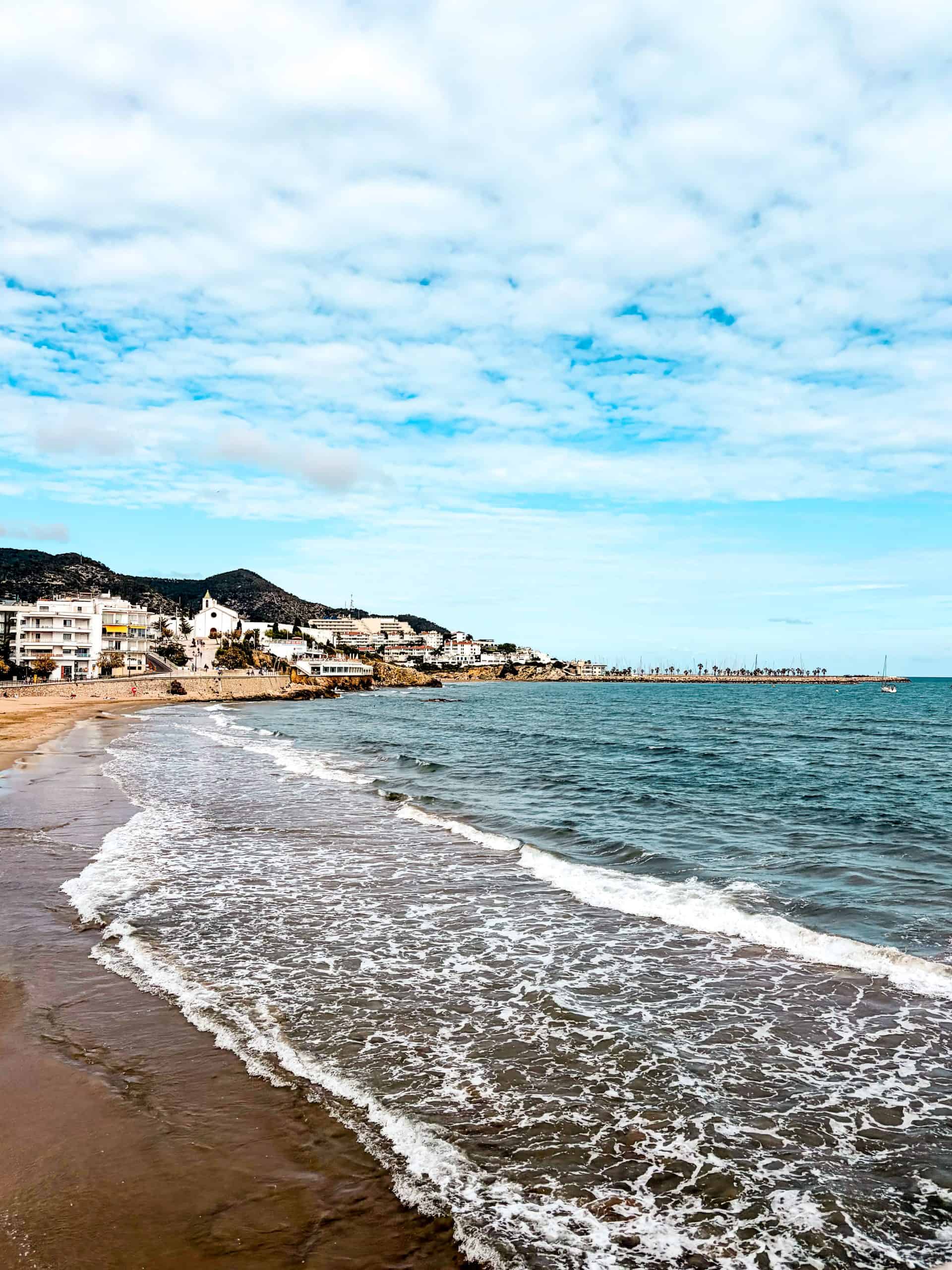
When I was there in early May, we spent time at the beach in Sitges (a charming coastal town about an hour from Barcelona by train- see photo above), and the water was refreshing in the way that means you get in for a few minutes and then get out.
We also wore sweatshirts to the beach some days, so the beach is great to hang out at but not really for swimming. The water doesn’t get truly warm until July.
If beach swimming is the main event for your trip, July and August deliver on water temperature, but you’ll be sharing the sand with a lot of people.
September is arguably the best beach month.
The water is still warm from summer, the crowds have thinned, and the weather is pleasant without being oppressive.
If you can swing a September trip, it’s hard to beat for a beach-focused visit.
Sitges is worth mentioning again here. It’s only about an hour from Barcelona by train, and the beaches there are noticeably calmer and more charming than Barceloneta.
It makes a great day trip or even a base for part of your trip.
Best Month to Visit Barcelona for Sightseeing
For sightseeing, spring and fall are the strongest windows, specifically April through May and September through October.
You get good weather and manageable crowds at the major sites.
Sagrada Família is the obvious centerpiece, and it’s worth visiting in any season.
That said, I’d book tickets at least four to six weeks out regardless of when you go — this is non-negotiable.
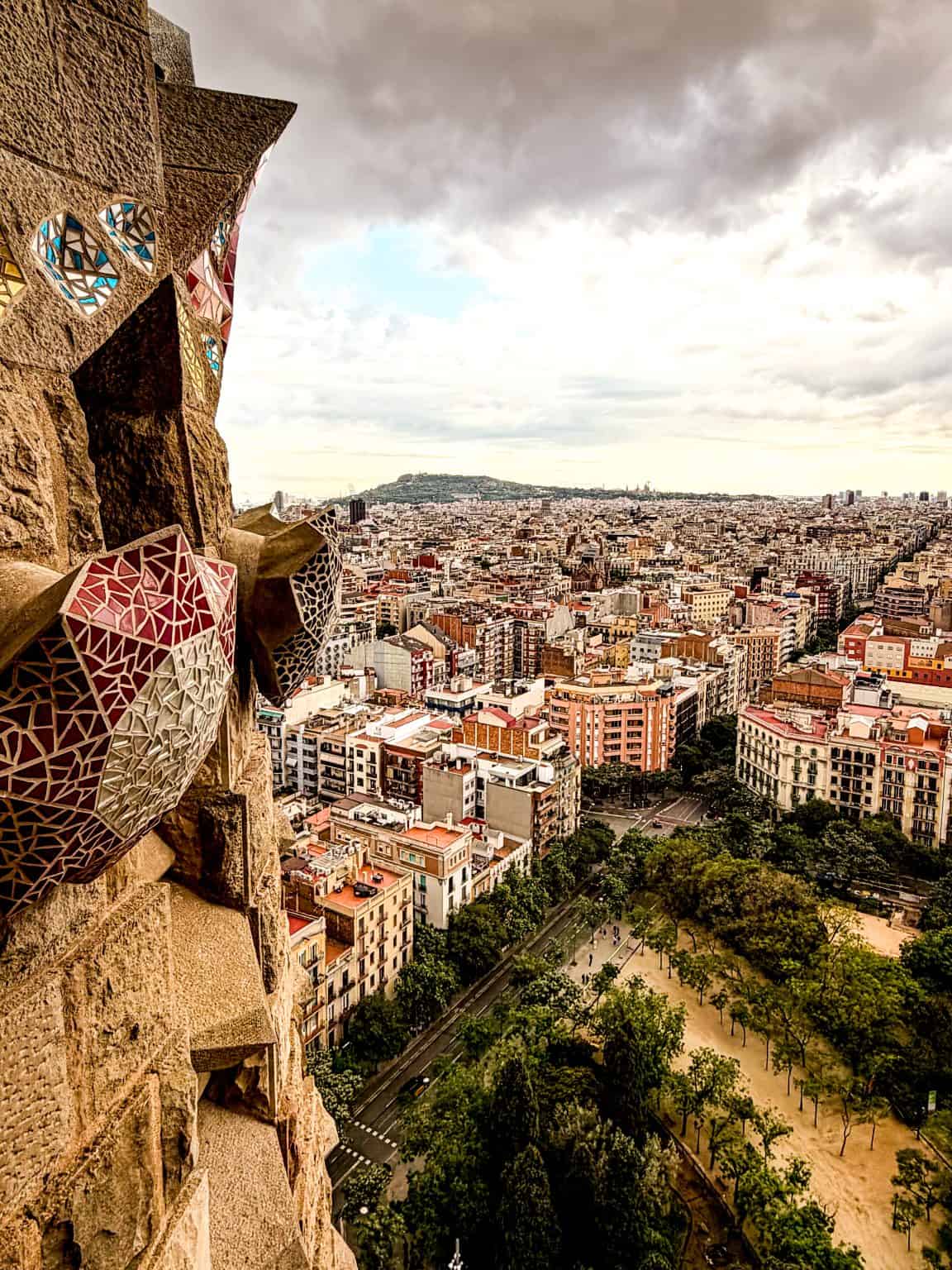
When I visited in early May, I booked six weeks ahead on the official website, arrived for a 6:15pm entry, and did the tower tour at 6:45.
We stayed until it closed at 8pm.
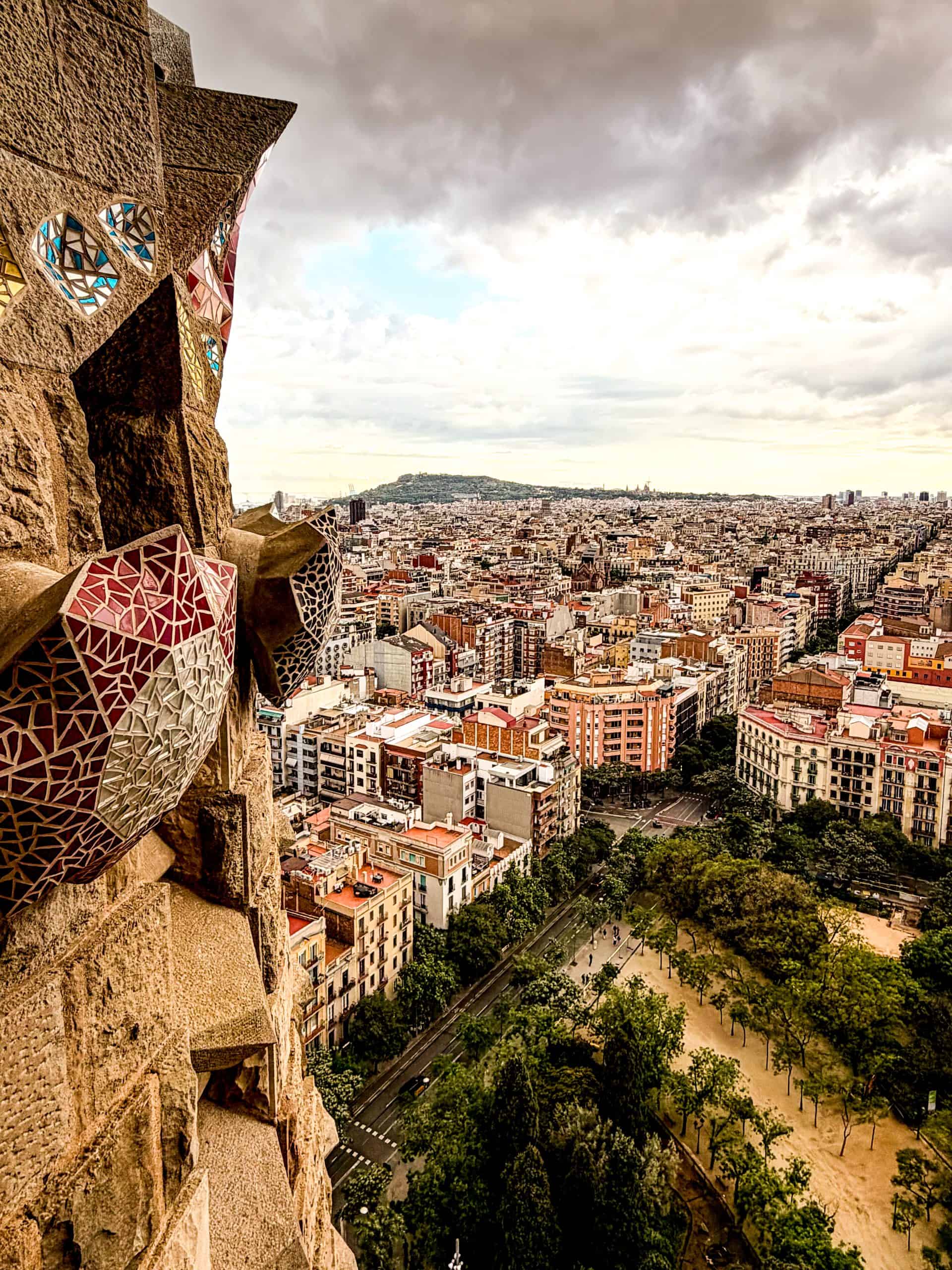
Even with other visitors around, it felt totally manageable, and the tower views over Barcelona at that hour were genuinely stunning.
🎟️Browse Sagrada Família tours and tower experiences in Barcelona→
The tower tour is absolutely worth adding.
You get up-close views of Gaudí’s tile work and sweeping views over the city that you simply don’t get from the main floor.
I’m not religious, but this is one of the most extraordinary buildings I’ve ever been in.
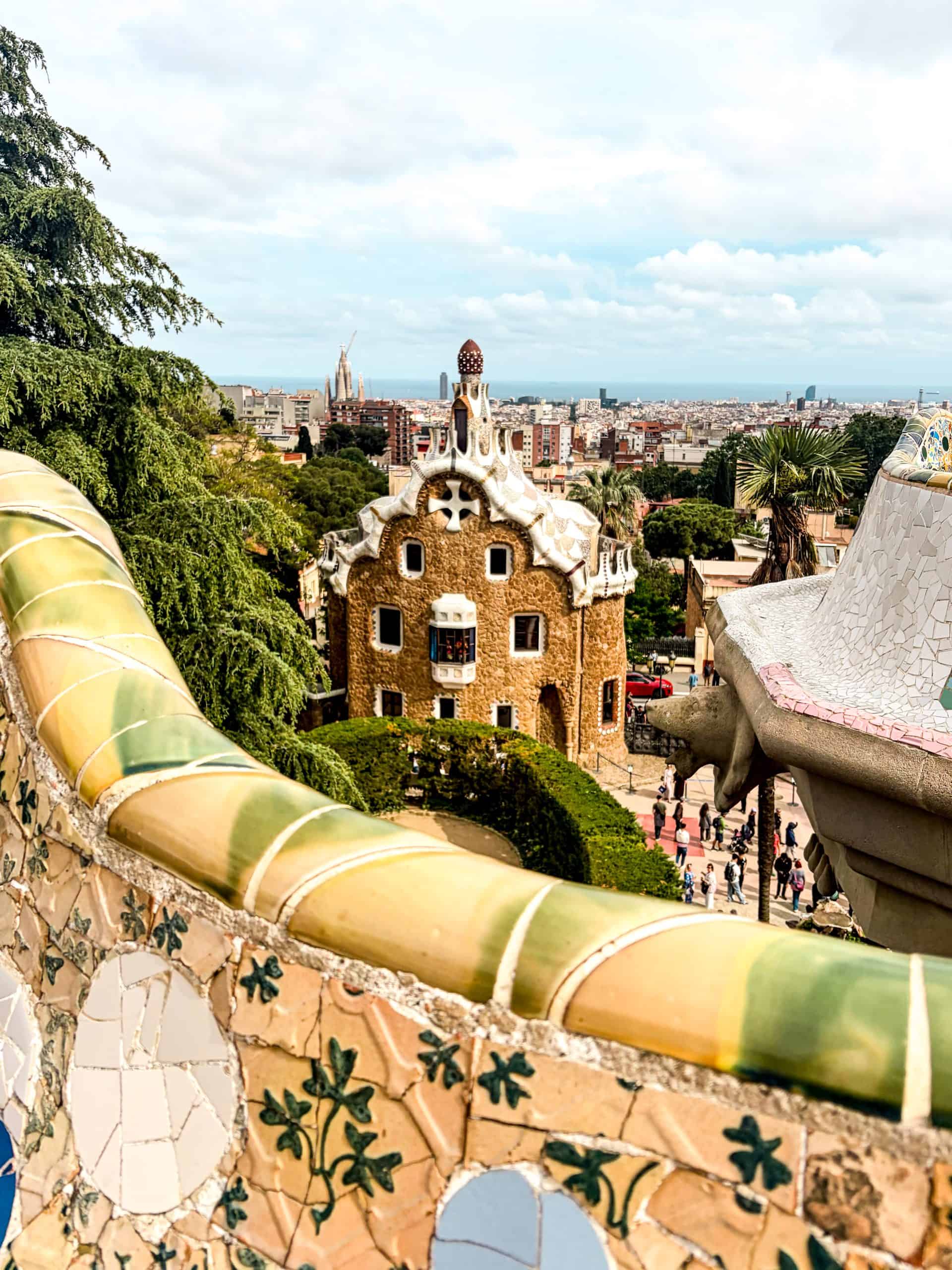
Park Güell follows the same pattern — always worth visiting, but noticeably more enjoyable outside peak summer.
The tile work and architecture are unlike anything else, and the Gaudí House Museum inside the park (where he lived for a time) is a nice addition if you have time.
For wandering and neighborhood exploration, shoulder season is when Barcelona really shines.
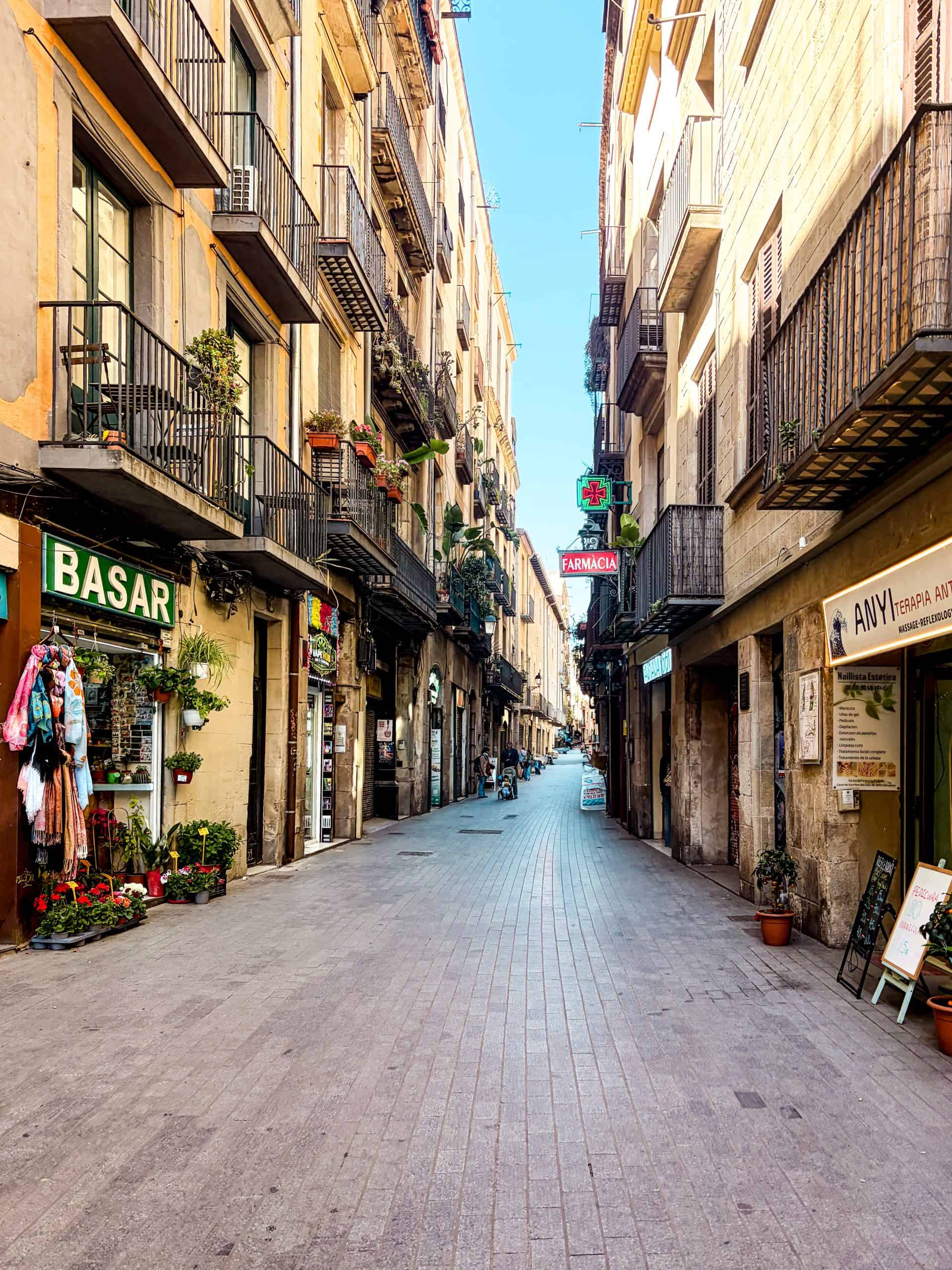
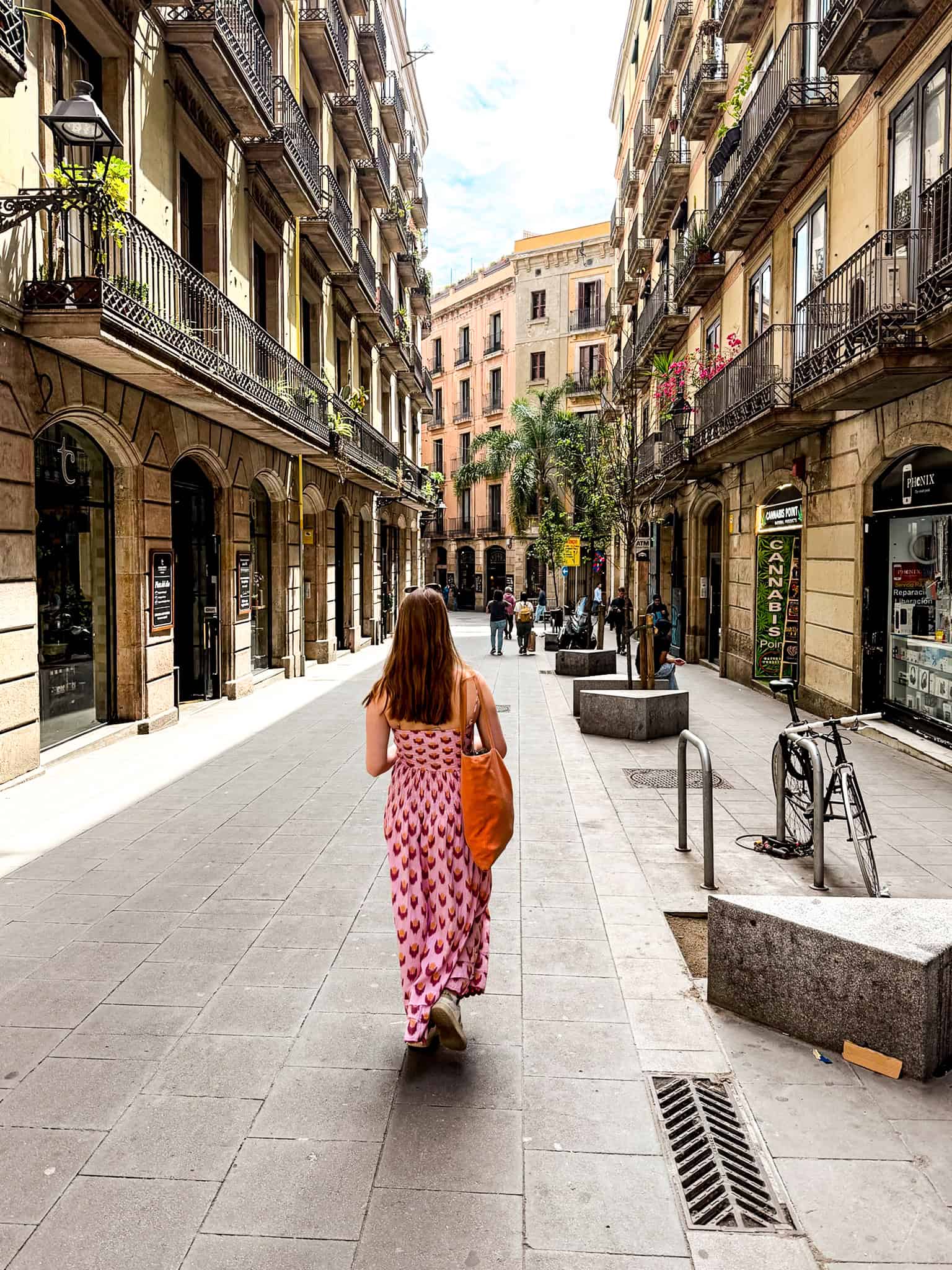
Eixample, Vila de Gràcia, El Poblenou, the Gothic Quarter — these neighborhoods have so much character, and you can actually experience them when the streets aren’t at maximum capacity.
Montjuïc Park and the MNAC (Museu Nacional d’Art de Catalunya) are also worth building in. I had no idea the museum complex existed before my trip and it completely surprised me.
A stunning park with sweeping staircases and views over the city, and I stumbled onto it entirely by accident.
Best Time to Visit Barcelona for Festivals and Events
Barcelona has a solid events calendar year-round, and a few festivals are genuinely worth planning around.
Spring Events
Sant Jordi (April 23) is Barcelona’s version of Valentine’s Day — the streets fill with roses and books, it’s very local and lovely, and it costs nothing to experience.
Primavera Sound (typically late May or early June) is one of Europe’s major international music festivals and draws a serious crowd of music lovers.
Summer Events
Sónar Festival in June is internationally known for electronic music.
Sant Joan on June 23 is a midsummer celebration with fireworks and bonfires on the beach — a great local experience if you’re there.
Pride Barcelona in late June is one of Europe’s biggest Pride events.
Sitges also hosts its own Pride, which has a strong reputation and a very welcoming atmosphere.
Fall Events
La Mercè in late September is Barcelona’s biggest local festival — free concerts, human towers (castellers), fire runs, and events across the city.
It’s the kind of thing that makes you feel like you’re actually experiencing Barcelona, not just visiting it.
If you can time your trip around La Mercè, do it.
Winter Events
December brings Christmas markets to the city — atmospheric, festive, and a genuinely nice time to visit if you’re traveling on a budget and don’t mind cooler temperatures.
What to Expect Season by Season — Honest Tradeoffs
Every season in Barcelona has a real upside, but every season also costs you something.
Here’s the honest version.
Spring is the sweet spot, but early May water is cold — don’t go expecting to swim.
The beach is beautiful to sit on, and the evenings are long, but if swimming is the goal, you’ll want to wait for summer or come back in September.
Summer is buzzy and fun, but the Sagrada Família is very crowded and touristy.
That said — it’s touristy for a reason. Still go.
Just manage your expectations and book ahead.
The bigger tradeoff in summer is that wandering through neighborhoods and sightseeing in general becomes a hotter, busier experience.
Fall is genuinely excellent and slightly underrated. The sea is warm, the light is beautiful, and the city is easier to move through.
September in particular hits a sweet spot between summer energy and shoulder-season calm.
Winter is quiet and affordable, but some of the beach-adjacent energy disappears.
Barcelona’s food scene, architecture, and indoor culture are strong enough to carry a winter trip — just don’t expect a warm, buzzy city vibe.
One thing that applies year-round: Spain runs on its own schedule.
Restaurants often don’t open for dinner until 8 or 8:30pm, mornings are slow, and the pace is deliberately unhurried.
Once you lean into it, it’s amazing.
But if you show up expecting dinner at 6pm, you’ll be eating alone.
If you’re planning to combine Barcelona with other destinations, the one week in Spain itinerary is a good place to start thinking through the logistics.
Common Mistakes to Avoid When Planning Your Barcelona Trip
Not booking Sagrada Família in advance. Book at minimum four to six weeks out on the official website. The tower tour sells out separately — add it. Skip the tower, and you’re genuinely missing half the experience.
Assuming the metro and buses take tap to pay. They don’t — and this caught me off guard coming from New York. You need a paper transit card, loaded at a metro station before you get on anything. There are no machines at bus stops, and the fine for riding without a valid ticket is €100. Don’t risk it.
Underestimating peak summer crowds. If you’re going in July or August, book accommodation and major attractions well in advance. The city is beautiful but it’s also extremely popular, and availability disappears fast.
Planning Montserrat as a day trip from Sitges. It’s about three hours each way from Sitges, which makes for an exhausting day with very little time at the destination. If Montserrat is on your list, base yourself in Barcelona for that part of the trip.
Showing up to dinner before 8pm. Many restaurants don’t open until 8 or 8:30. This is especially jarring for first-timers — just plan around it and enjoy a late lunch instead.
Forgetting cash. The airport bus from Sitges (Line 1144 / E16) is cash only — €5.40 one way, about 45 minutes to the terminal. Some smaller spots around the city also still prefer cash.
Confirm this before you go, but it’s a great deal while it lasts — about an hour each way and genuinely easy.
Where to Stay in Barcelona
Where you stay shapes the trip more than people expect.
Barcelona’s neighborhoods each have a distinct feel, and the right choice depends on what you’re prioritizing.
Budget Option — El Raval or Gothic Quarter
Both neighborhoods are central, walkable, and close to major sights.
Hostels here are well-located and good for solo travelers or social trips.
Just know that both areas can be noisy at night — light sleepers should bring earplugs or look for a room on a quieter street.
Mid-Range Option — Eixample
Eixample is my favorite neighborhood in Barcelona, and I’d stay here without hesitation.
It’s a great central base — beautiful wide boulevards, Modernista architecture everywhere you look, walkable to Sagrada Família, Park Güell, and the Gothic Quarter, and a genuinely excellent café and restaurant scene.
Both of my full days in Barcelona were anchored in Eixample and it never got old.
📍Find great places to stay in Barcelona’s Eixample neighborhood→
Splurge Option — El Born or Barceloneta
El Born has a boutique hotel scene and a stylish, slightly quieter vibe than the Gothic Quarter — close to the waterfront and easy to explore.
Barceloneta puts you right on the beach, which is ideal for summer trips when beach access is the priority.
How to Get to Barcelona and Get Around
Getting to Barcelona
Direct flights from JFK to Barcelona run about seven to eight hours — not bad at all for a transatlantic trip.
I flew direct and it was genuinely comfortable as far as overnight flights go.
Barcelona El Prat Airport (BCN) is well-connected and easy to navigate on arrival.
✈️Search flights to Barcelona→
Getting Around Barcelona
The metro is the easiest way to move around the city.
A single ride costs €2.90 — buy a paper ticket at a metro station (single trip, 10-trip card, or 30-day unlimited are your options).
There is no tap to pay, so load your card before you need it.
Buses follow the same system — load your card at a metro station before boarding, because there are no machines at bus stops.
The fine for riding without a valid ticket is €100, which is not a fun way to start a trip.
Day Trip to Sitges
The R2 train between Barcelona and Sitges is currently free due to construction and takes about an hour each way.
It’s easy, reliable, and genuinely one of the better transit deals in Europe right now.
The last train back to Sitges runs around 10:58pm — if you’re staying in Sitges and planning a late night in Barcelona, you’ll need to factor that in or budget for a taxi (around €85 from the airport; say “sin autopistas” to avoid toll roads and it comes closer to €75).
The bus from Sitges to the airport (Line 1144 / E16) is €5.40 cash and takes about 45 minutes — a much more affordable option than a taxi if your schedule allows.
Bring cash, because the bus doesn’t accept cards.
FAQs About the Best Time to Visit Barcelona
What is the best month to visit Barcelona?
May is my top pick — warm weather, long evenings, manageable crowds, and good prices.
September is a close second if you want warm swimming water with fewer people than summer.
Is May a good time to visit Barcelona?
Yes, genuinely one of the best.
High 60s temperatures, sunset around 9pm, and crowds that are active but not overwhelming.
The beach is beautiful but the water is still cold, so adjust expectations accordingly.
When is Barcelona least crowded?
January and February are the quietest months.
November and early December are also calm.
Shoulder season (April–May and September–October) strikes a better balance between manageable crowds and good weather.
How hot does Barcelona get in summer?
July and August regularly hit the 80s and 90s°F.
It’s hot, the beaches are packed, and the city is at maximum tourist capacity.
Book everything in advance if you’re going in peak summer.
When should I book Sagrada Família tickets?
At least four to six weeks in advance, on the official website.
Add the tower tour — it sells out separately, and it’s the best part of the visit.
Final Thoughts
I hope you go to Barcelona no matter what season you pick. It’s beautiful and so worth it.
Summer is vibrant and beautiful, but it’s also the version of the city where you’re sharing every experience with a very large crowd.
Winter is quiet and affordable but sometimes feels too quiet. Late spring (May in particular) is by far my favorite time to visit.
Early spring is a little cooler but still beautiful, and the calm is worth it.
Whatever month you land on, go. You can’t go wrong with picking a time to visit Barcelona.
I hope you have the best time!
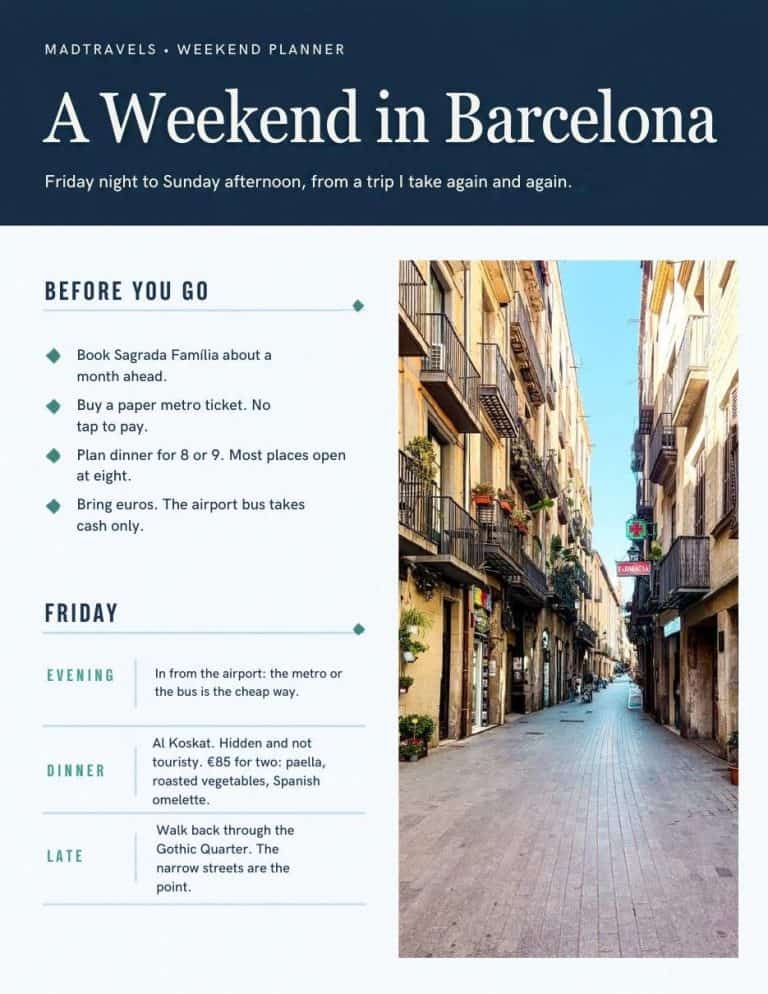
A Weekend in Barcelona, planned for you
Friday night to Sunday afternoon on one printable PDF: before-you-go tips, where I ate and what it cost.
Or just download it, no sign-up needed.
I hope you have the best trip!
Everything here comes from my own time in Barcelona. Take what’s useful and make the trip your own.


